Reactive Flood Response
Overview of the Challenge
Flood events can occur unexpectedly, disrupting site operations, damaging infrastructure, and creating health and safety hazards for employees and visitors. Reactive Flood Response focuses on delivering rapid assessment, mitigation, and long-term prevention solutions for clients experiencing sudden surface water flooding due to infrastructure failures or blocked drainage systems.
Situation and Initial Assessment
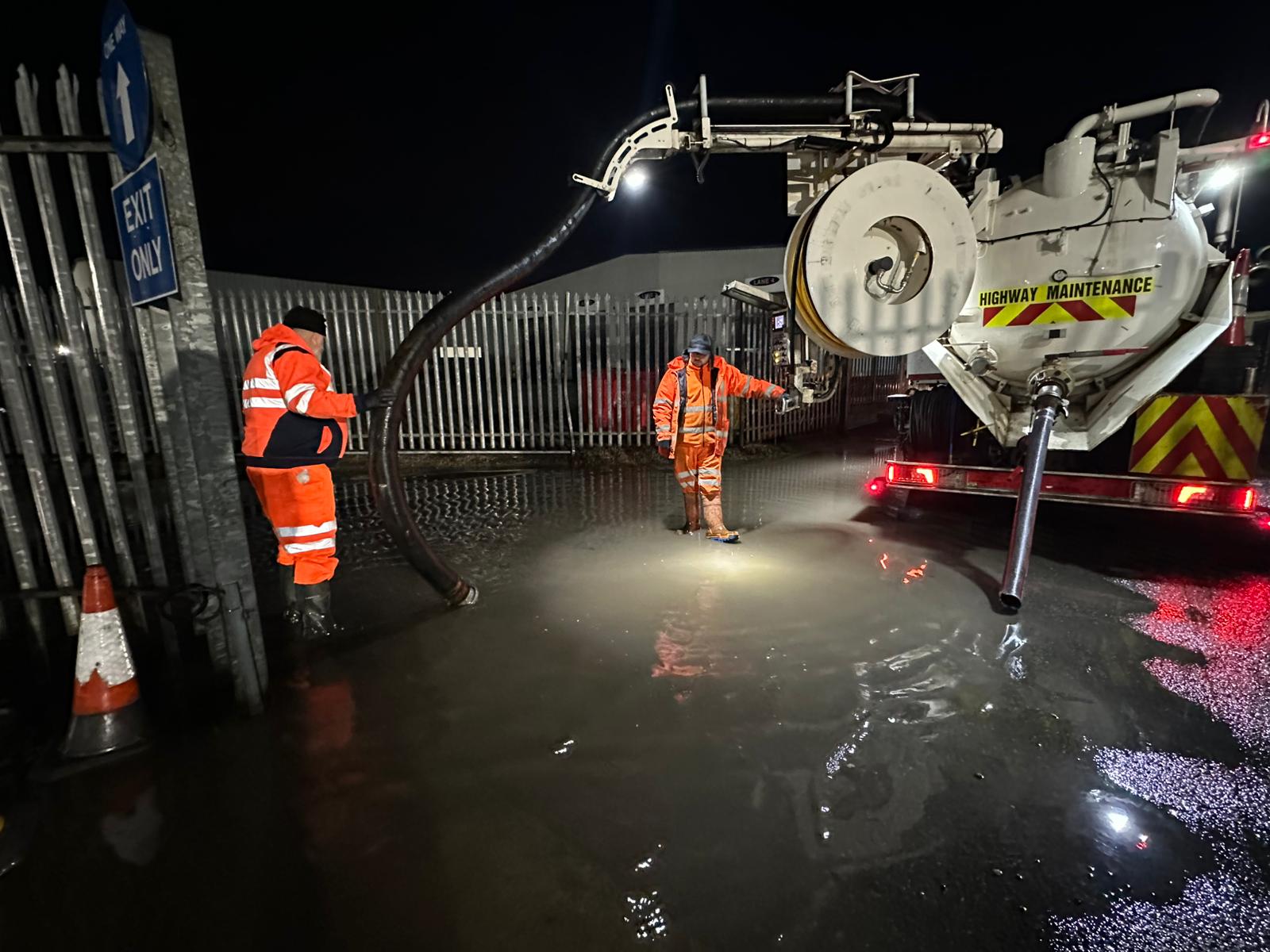
In this project, an industrial unit was experiencing significant flooding that rendered its main exit area unusable. On arrival, our team observed that the existing drainage network — particularly older underground drains — were unmapped, misconnected, or terminated prematurely, creating an overflow situation during heavy rainfall. This lack of effective surface water discharge pathways directly contributed to the flooding issue.
Rapid Emergency Response
Once the client contacted us, we mobilised our specialist flood response team — well-equipped with drainage detection tools, and traffic-management hardware — on the same afternoon. Immediate priorities included:
Drainage network investigation and condition assessment to locate blockages and identify where the surface water was accumulating.
Rapid removal of standing rainwater using high-capacity tankers to restore access and reduce risk to property and personnel.
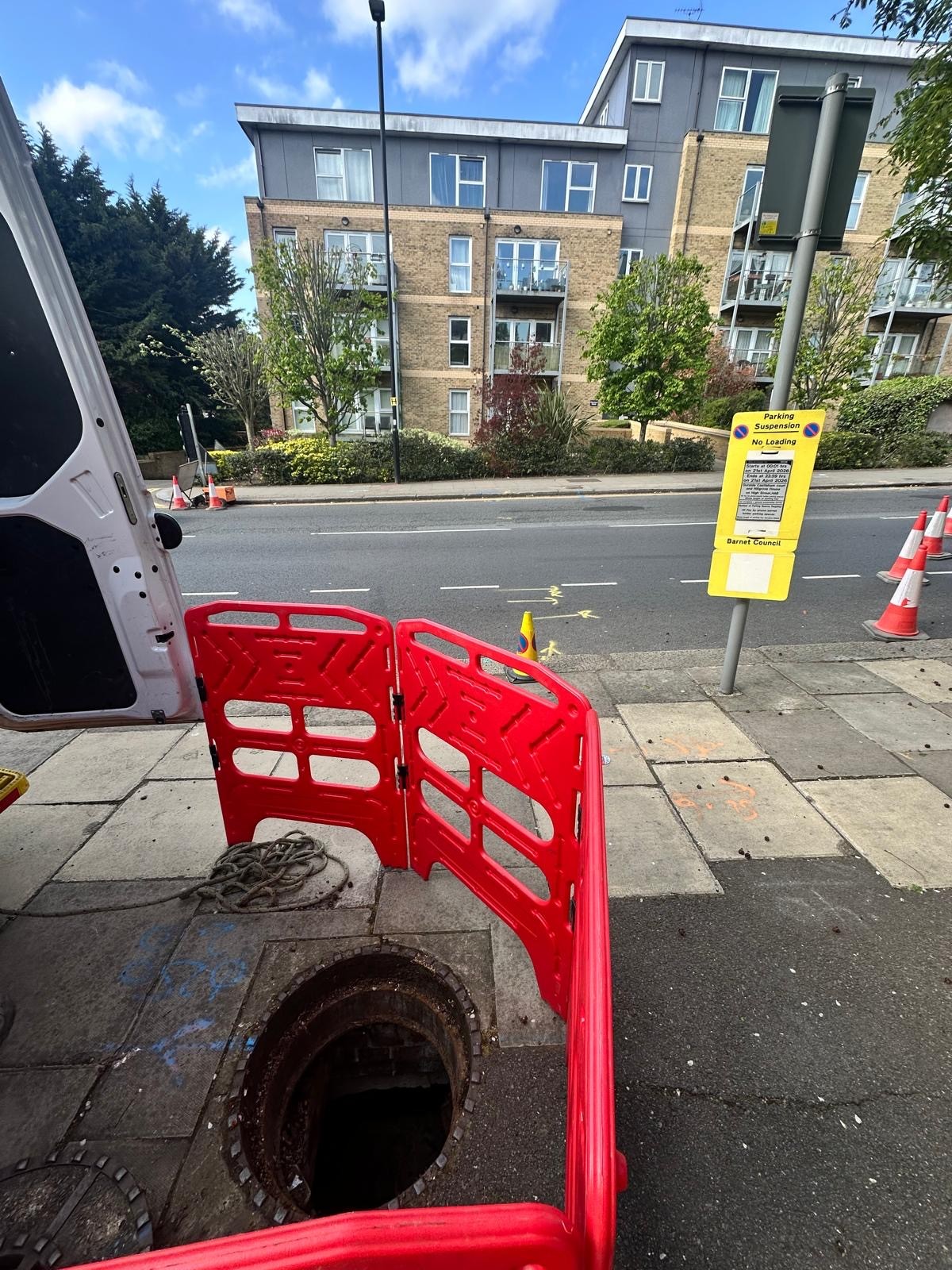
Health and safety implementation, including cordoning off affected areas and ensuring safe working zones during water removal.
Root Cause Diagnosis
With initial water levels reduced, our engineers conducted a detailed root cause analysis of the flooding. This involved:
Tracing the drainage network layout to understand existing flow paths.
Investigating any structural issues, such as collapsed pipes, silted chambers, or disconnected runs.
Evaluating surface water runoff patterns and how they entered the drainage system.
This diagnostic stage ensured that the solution addressed the underlying cause rather than just treating the symptoms.
Solution Design and Installation
After diagnosing the issue, the team designed and installed a robust surface water management solution that prevented recurrence:
Installation of a new pump chamber strategically positioned to intercept surface water at low points.
Connecting this chamber to a functional nearby surface water outlet, ensuring proper outflow without risking overload of existing drains.
Incorporating check valves and flow control measures to manage peak rain events and prevent backflow.
Quality Assurance and Testing
Prior to handover, all components were thoroughly tested:
Water flow testing to confirm drainage efficiency.
Pump activation cycles to ensure automatic response during future heavy rainfall.
Site walkthroughs with the client to demonstrate system performance and maintenance recommendations.
Outcome and Benefits
As a result of our rapid intervention and engineered solution:
✔ Surface water flooding was eliminated in the main operational area.
✔ A reliable drainage route was created, reducing future flood risk.
✔ The client regained safe and uninterrupted use of the facility.
✔ Long-term resilience against heavy rainfall events was substantially improved.
Why Professional Reactive Flood Response Matters
Flooding incidents are increasing in frequency and severity due to climate change and ageing infrastructure. Effective reactive responses combine emergency intervention with diagnostic engineering and long-term solutions — not just temporary fixes. This holistic approach aligns with best practices in flood risk management, including emergency response coordination, site assessment, and preventive design.