Drain Survey - Industrial
Project Purpose
This industrial drain survey was commissioned to understand the condition, connectivity, and integrity of an underground drainage network on a large commercial site. Industrial and commercial drainage systems can be extensive and complex, and identifying hidden blockages, structural defects, or undocumented connections is essential for maintenance planning, compliance, and safe operation.
A professional CCTV drain survey is a non-invasive diagnostic inspection, widely used across industrial estates, factories, warehouses, and commercial campuses to deliver accurate condition assessment and avoid disruptive excavation.
Initial Consultation & Site Review
Before any on-site work began, our team:
Discussed objectives with the client — clarifying what needed to be surveyed and why (e.g., suspected blockages, pre-construction checks, regular maintenance planning).
Reviewed any existing drainage drawings or plans — if available — to identify known pipe locations, access points, and potential survey entry points.
Conducted a risk assessment and access plan to ensure safe working conditions across heavy-traffic industrial areas.
This planning phase ensures that the survey targets the relevant parts of the system and minimises safety and operational disruption.
Drainage Access Preparation
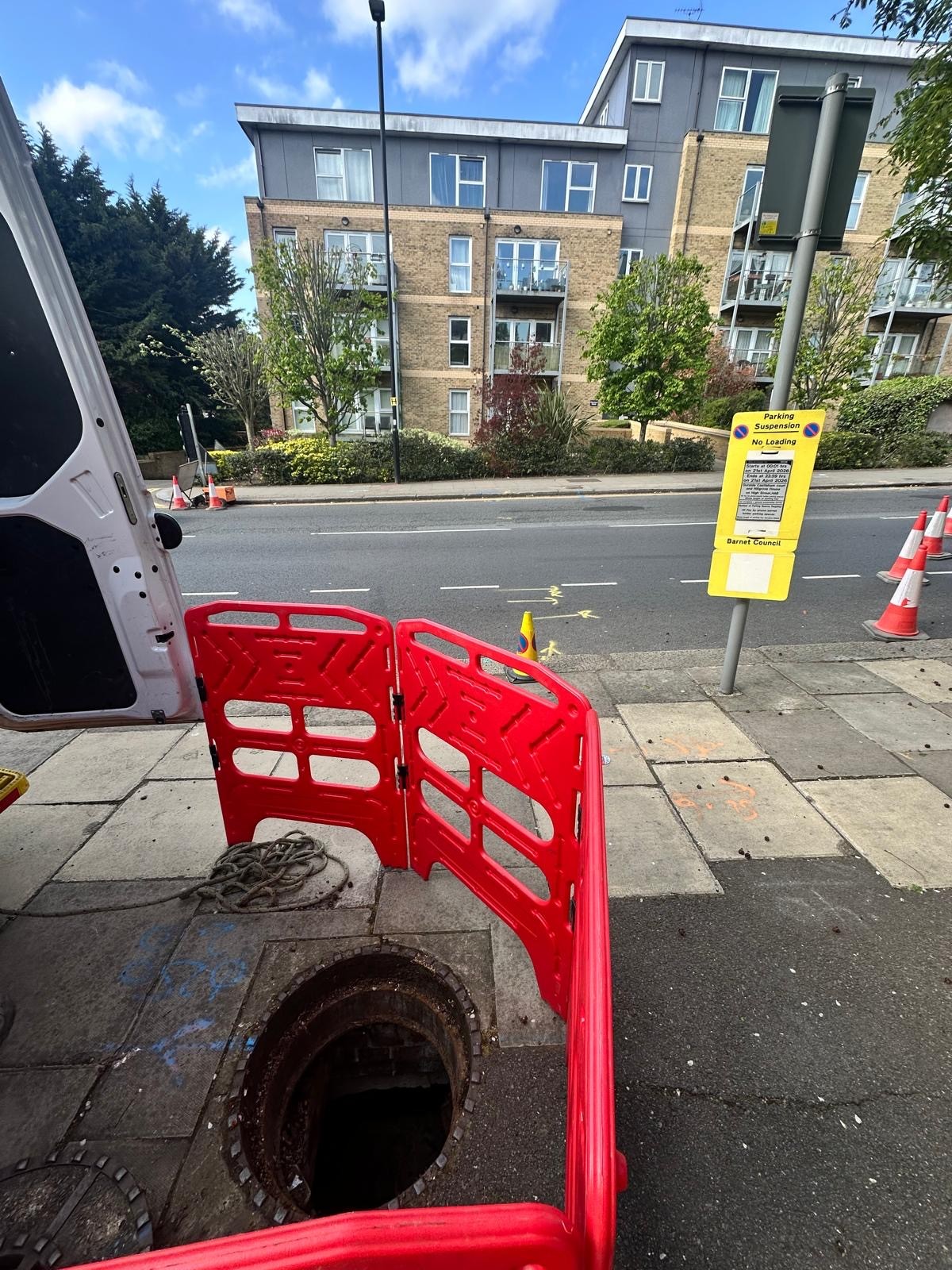
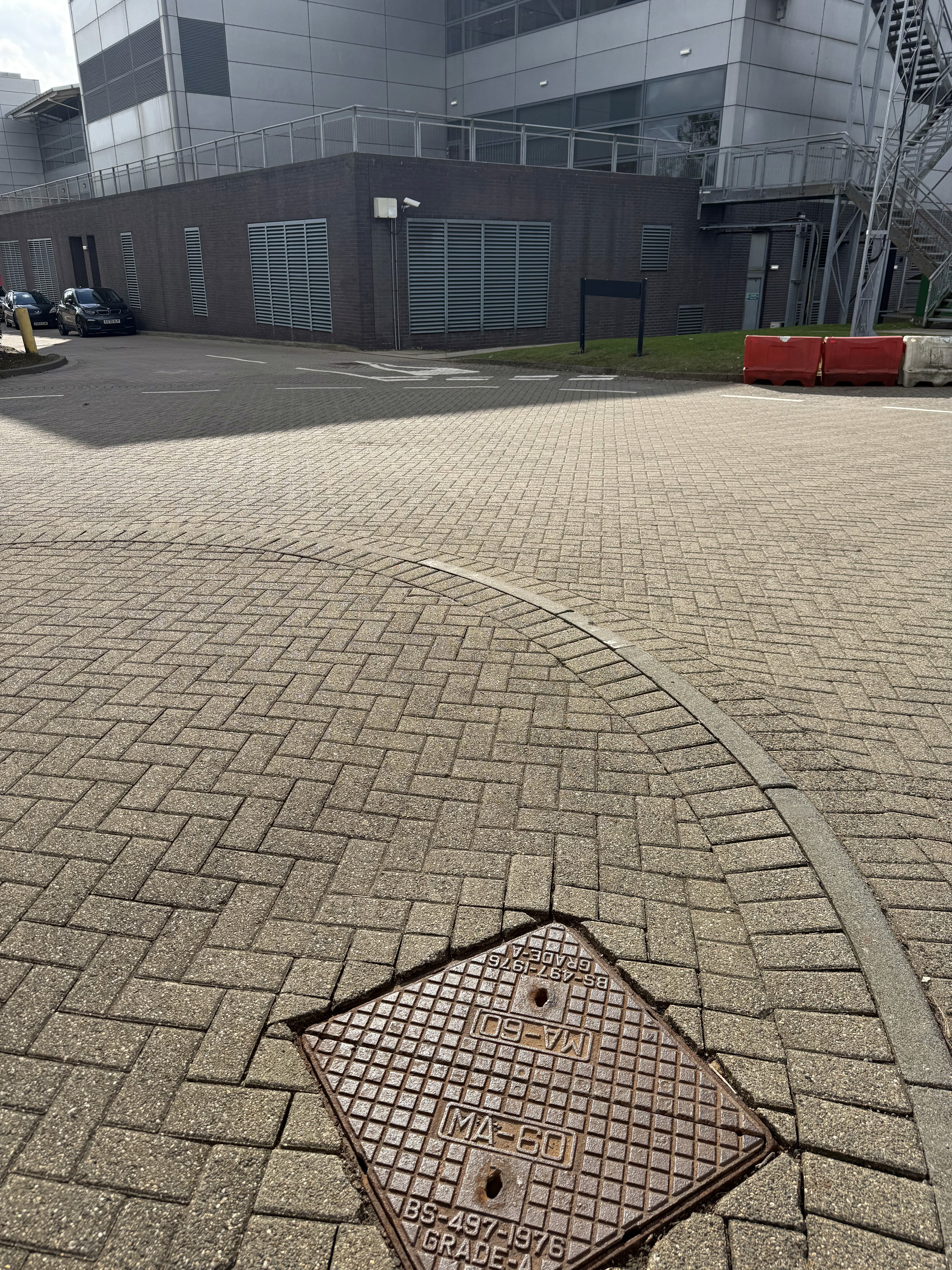
To carry out an effective CCTV survey, our operatives located and prepared access points, such as manholes, inspection chambers, or rodding eyes. On larger industrial networks, multiple entry points are often needed to survey the full system. If necessary, preliminary drain cleaning or jetting can be used to remove silt, debris, or grease that would otherwise obstruct visibility.
CCTV Inspection & Condition Assessment
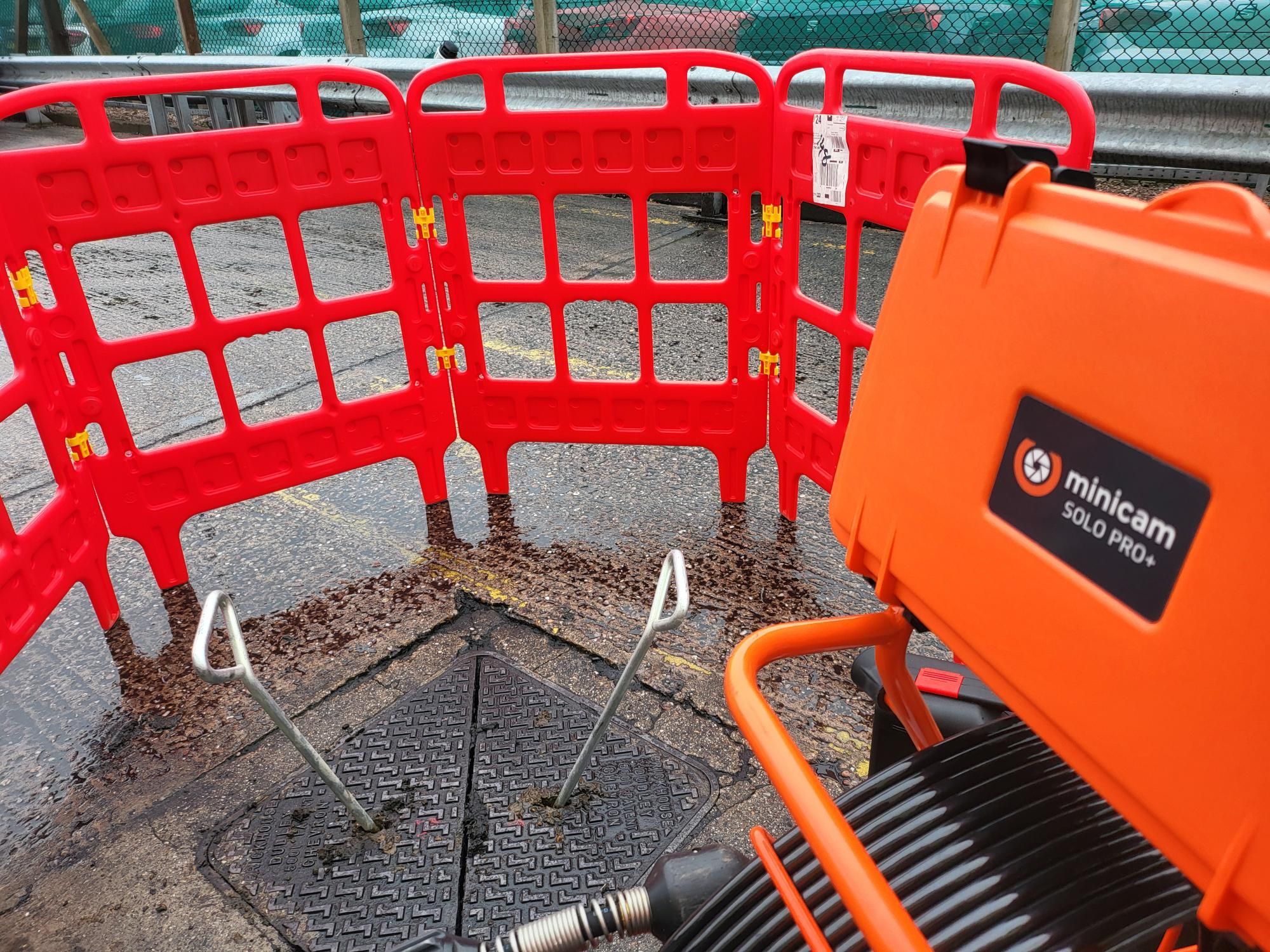
Using specialist CCTV camera systems, our team inserted high-resolution cameras into the drainage pipes. These cameras travel through the system — either pushed along with rods for smaller lines or driven with crawler units for larger diameters — capturing detailed visual footage of the internal pipe conditions. The survey recorded:
Structural defects like cracks, joint displacements, fractures, or collapsed sections.
Blockages caused by debris, build-up, roots, or sediment.
Misconnections or changes to the drainage layout not reflected on existing plans.
Flow irregularities or signs of infiltration/exfiltration.
This internal inspection method — often referred to as CCTV drain surveying — allows engineers to see what’s happening underground without expensive and disruptive digging.
Mapping & Asset Documentation
While the camera was deployed, the survey team collected data to confirm pipe routes, depths, and connectivity. Accurate drainage mapping is especially important on industrial sites where multiple branches, junctions, and outfalls feed into wider networks. This process transforms raw visual data into a site-wide drainage plan that can be used for future maintenance or planning.
Reporting & Technical Analysis
After completing the inspection, all footage and observations were analysed and compiled into a technical condition report. Typical elements included:
Annotated stills and video clips showing key findings.
A defect schedule with coded descriptions of issues.
Sketches or CAD-style drainage diagrams showing pipe runs and connections.
Recommendations for repairs, remedial works, or further investigation, where required.
This structured reporting approach lets property owners and engineers clearly understand the state of their drainage assets and make informed decisions.
Outcome and Benefits
As a result of the detailed industrial drain survey:
✔ The full extent of the drainage network was accurately mapped and documented.
✔ Critical defects — including blockages or structural weaknesses — were identified and localised.
✔ A clear, actionable drainage condition report was delivered to the client.
✔ The data provided essential insight for long-term maintenance planning, compliance checks, and forthcoming works.
Why Industrial Drain Surveys Are Critical
Industrial drainage systems handle large volumes of wastewater, surface water, and process effluent. Hidden issues in these systems can lead to flooding, environmental pollution, safety hazards, and costly shutdowns. Regular CCTV surveys:
Reveal underlying problems before they escalate.
Provide evidence for maintenance planning and regulatory compliance.
Prevent disruption associated with unexpected failures.
Support asset management strategies across complex infrastructure.
By combining advanced camera technology with expert technical analysis, industrial drain surveys offer a reliable, non-destructive way to assess subsurface drainage networks comprehensively.