Artifical Grass Install
Project Overview:
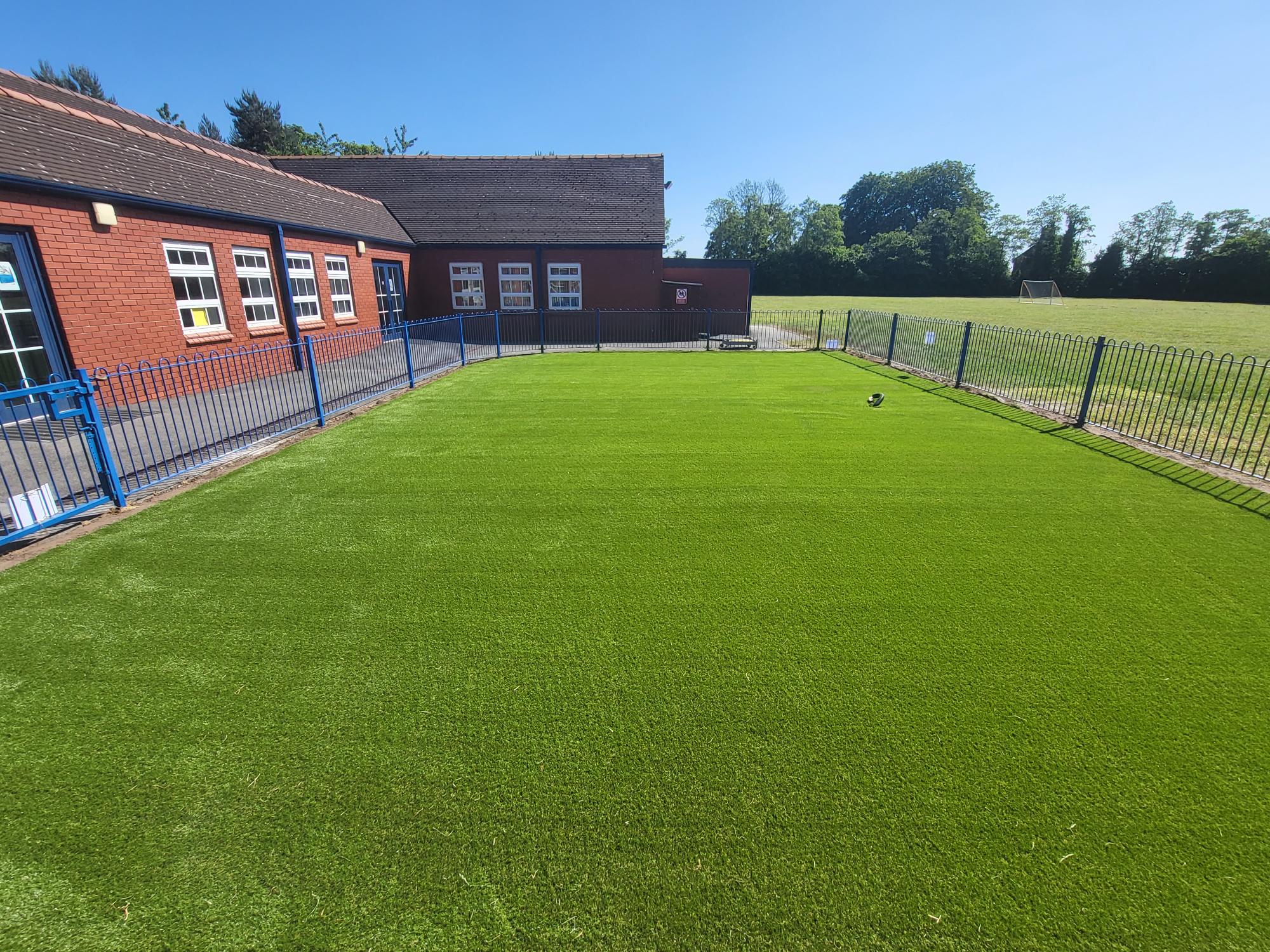
The aim of this project was to transform an unusable outdoor area at a primary school into an attractive, safe, and low-maintenance artificial turf playground that can be enjoyed by students year-round. This installation improved safety, enhanced aesthetic appeal, and provided a functional play surface that avoids mud and wear common to natural grass.
Initial Site Preparation and Waste Removal
Before installation could begin, the area was cleared of all existing waste, debris, and unsuitable surface materials. This site clearance and grading step ensured the ground was prepared to the correct levels and removed obstacles that could affect drainage or turf performance. Proper levelling also prevents water pooling and creates an even playing surface.
Weed Suppression and Drainage Planning
To support long-term performance, a weed suppression membrane was installed across the prepared area prior to laying the sub-base. A high-quality membrane prevents unwanted vegetation from growing up through the artificial turf, helping maintain a neat and safe surface. In playground settings, good drainage is crucial to avoid waterlogging and promote quick drying after rain.
Sub-Base and Groundworks
A robust sub-base was installed next — using MOT Type 1 aggregate — which was spread and thoroughly compacted to form a stable, load-bearing foundation. A compacted granular sub-base also improves surface drainage, preventing water from pooling and helping the turf to perform well in all weather conditions. A final layer of grano dust (fine stone) was then applied and rolled smooth to create a level, even surface ready for the artificial turf.
This base construction phase mirrors the industry-standard ground preparation steps seen in playground surfacing guides, where preparing a stable, permeable foundation is key to long-lasting performance.
Artificial Turf Specification and Installation
The installed turf was a multidirectional weave with a medium pile height, ideal for general playground activities where both comfort and durability are important. Multidirectional turf provides even performance regardless of play direction and is designed to withstand high foot traffic typical of school use.
Once the sub-base was ready, the artificial grass rolls were carefully unrolled, aligned, and cut to fit the prepared area. Professional techniques were used to ensure seams were tight and secure, edges were neatly trimmed, and the surface was free of wrinkles or imperfections.
Performance and Benefits
After installation:
Playability improved — the new surface provides a safe, mud-free environment that students can use all year round, whatever the weather.
Low maintenance — unlike natural turf, artificial grass requires minimal upkeep, reducing the burden on school grounds staff.
Enhanced safety and aesthetics — the surface looks neat and vibrant while providing a consistent, resilient play area that supports both informal play and organised activities.
Why Schools Choose Quality Artificial Grass Surfacing
Artificial grass has become a popular choice for school playgrounds because it’s:
Durable and all-weather friendly — it stays green and usable throughout the year without mud or bare patches.
Low maintenance and cost-effective — schools benefit from reduced landscaping chores and long-term savings.
Safe when properly constructed — combining turf with engineered bases and, where required, shock-absorbing underlays creates soft surfaces that help reduce injury risks.
Overall, this installation delivered a vibrant, practical outdoor play surface that enhances the school environment, promotes play and physical activity, and aligns with modern expectations for safe, durable educational facilities.