
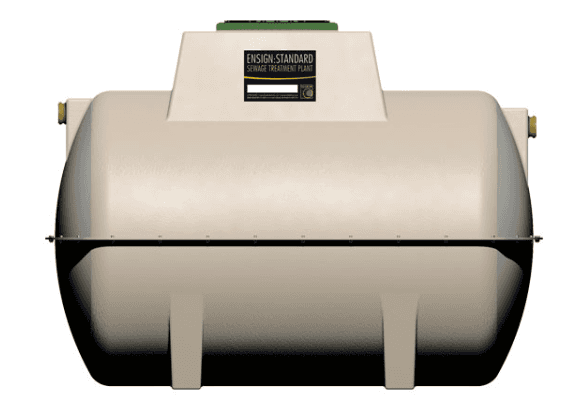
Tank Installation Advice
How to Install & Maintain a Commercial Sewage Treatment System
Sewage treatment systems are essential for:
Commercial premises without mains drainage
Industrial estates
Schools & rural facilities
Agricultural buildings
Business parks
Construction compounds
A properly installed and maintained system prevents:
Environmental contamination
Regulatory breaches
Odours
Groundwater pollution
Costly enforcement action
System failure
Step 1: Site Assessment & Ground Investigation
Before installation begins, a proper assessment must include:
Percolation testing
Ground conditions survey
Location of watercourses
Environment Agency compliance review
Access planning for tankers and maintenance
Incorrect siting is one of the most common causes of long-term system failure.
Benefit:
Ensures compliance with environmental regulations and prevents costly relocation or redesign.
Step 2: Confirm Discharge Consent & Regulations
Commercial sewage treatment systems must comply with:
General Binding Rules
Environment Agency guidance
Building Regulations Part H
If discharging to a watercourse, specific permissions may be required.
Benefit:
Avoids legal issues, fines, and potential enforcement notices.
Step 3: Excavation & Base Preparation
Installation requires:
Safe excavation to required depth
Stable formation
Concrete or compacted granular base (as specified)
Level checks prior to tank placement
Proper base preparation prevents settlement and tank distortion.
Benefit:
Protects structural integrity and extends system lifespan.
Step 4: Installation of the Treatment Plant
The sewage treatment unit must be:
Installed level
Surrounded with correct backfill material
Filled with water during backfilling (if required by manufacturer)
Connected using approved pipework
Vented correctly
Poor installation can void manufacturer warranties.
Benefit:
Ensures efficient biological treatment and protects warranty cover.
Step 5: Electrical Connection & Commissioning
Most modern treatment plants require:
Power supply
Alarm systems
Air blower connection
Commissioning includes:
Testing flow
Checking aeration
Confirming discharge quality
Benefit:
Ensures the system is operational and compliant from day one.
Step 6: Ongoing Maintenance & Servicing
Sewage treatment systems require regular servicing, typically:
Annual service inspection
Sludge level checks
Air blower inspection
Alarm system testing
Effluent quality assessment
Neglecting servicing leads to system overload and discharge failure.
Benefit:
Prevents breakdowns and protects environmental compliance.
Step 7: Scheduled Desludging
Depending on usage levels, desludging is typically required every 6–12 months for commercial systems.
Failure to desludge causes:
Odours
Poor treatment
Overflow risk
System damage
Benefit:
Maintains treatment efficiency and prevents emergency call-outs.
Correct Sewage Treatment Installation Methodology
Ground investigation
Regulatory compliance review
Controlled excavation
Stable base preparation
Correct tank installation
Electrical commissioning
Ongoing service plan
Preventative maintenance is always more cost-effective than emergency replacement.
Why Sewage Treatment Maintenance Is Critical for Commercial Sites
Poorly maintained systems can lead to:
Pollution incidents
Enforcement action
Fines
Reputational damage
Ground contamination
Flooding
System collapse
For industrial and commercial premises, failure can disrupt operations significantly.
Long-Term Benefits of Professional Installation & Maintenance
✔ Full environmental compliance
✔ Reduced risk of pollution
✔ Lower lifecycle costs
✔ Extended system lifespan
✔ Protection of groundwater
✔ Avoidance of fines or enforcement
✔ Reliable long-term performance
✔ Peace of mind for site owners
FAQs – Sewage Treatment Systems
Q: How often should a commercial sewage treatment plant be serviced?
Most systems require at least annual servicing, though high-usage sites may require more frequent inspections.
Q: How do I know if my system is failing?
Signs include odours, slow drainage, alarm activation, pooling water near discharge areas, or unusually green vegetation around soakaway zones.
Q: Is a sewage treatment plant better than a septic tank?
Yes. Treatment plants actively aerate and treat effluent to a higher standard, making them more suitable for commercial discharge requirements.
Q: Do commercial systems require discharge consent?
In many cases systems must comply with General Binding Rules, and some discharges require additional consent depending on location.
Q: What happens if a system is not maintained?
Failure to maintain can result in pollution, enforcement action, costly repairs, or full system replacement.
