
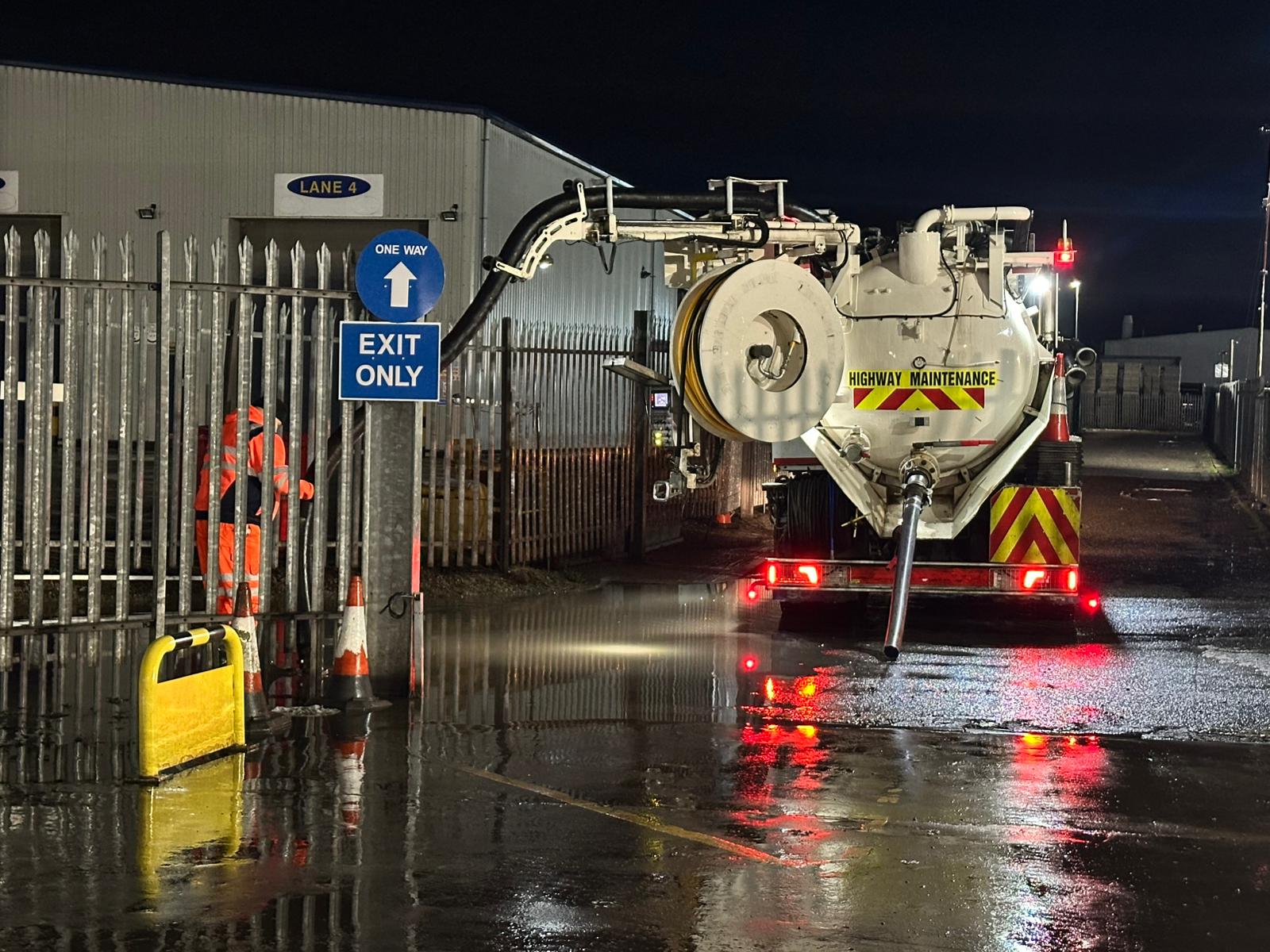
5 Hidden Drainage Problems
5 Hidden Drainage Problems That Cause Flooding in Commercial Car Parks (And How to Fix Them)
Flooding in commercial car parks is one of the most common drainage problems faced by facilities managers and property owners across the UK.
Standing water is more than just an inconvenience. Persistent flooding can lead to:
structural pavement damage
safety hazards for vehicles and pedestrians
accelerated surface deterioration
environmental pollution risks
potential liability claims
In many cases, the underlying cause is not obvious from the surface.
At Civils and Environmental, we regularly investigate drainage systems on industrial estates, retail parks, and logistics depots where flooding occurs despite the presence of drains.
Below are five hidden drainage problems that frequently cause car park flooding, along with the engineering solutions used to resolve them.
1. Blocked or Silted Underground Drainage Pipes
One of the most common causes of flooding is sediment build-up inside underground pipes.
Over time, silt, debris, leaves, and road grit accumulate in the drainage system. This gradually reduces pipe capacity until the system can no longer handle heavy rainfall.
Typical warning signs
Water drains slowly after rainfall
Gullies appear clear but flooding still occurs
Flooding worsens during storms
Engineering solution
A CCTV drainage survey is typically required to inspect the underground pipe network.
This survey identifies:
sediment accumulation
structural pipe damage
root intrusion
blockages
Once identified, the system can usually be restored through high-pressure jetting or mechanical cleaning.
In severe cases, sections of pipe may require replacement.
2. Incorrect Drainage Gradients
Drainage systems rely on gravity flow.
If pipes or channels were installed with insufficient fall, water moves too slowly through the system.
Over time this leads to:
sediment accumulation
reduced flow capacity
eventual flooding during rainfall events
Why this happens
Poor gradients often originate from:
incorrect installation during construction
ground settlement
poorly designed drainage layouts
Engineering solution
A drainage survey combined with level surveys and hydraulic assessment can determine whether pipe gradients are sufficient.
Solutions may include:
pipe regrading
partial pipe replacement
installation of new drainage runs
3. Undersized Drainage Systems
Many commercial sites experience flooding simply because the original drainage system was never designed to handle modern rainfall levels.
Older developments were frequently designed using rainfall data that no longer reflects current weather patterns.
As a result, during intense storms the drainage system becomes overwhelmed.
Signs of undersized drainage
flooding during heavy rainfall only
water backing up from gullies
multiple flooding locations across the car park
Engineering solution
Where drainage capacity is insufficient, the system may require:
additional drainage channels
larger diameter pipework
attenuation tanks
sustainable drainage systems (SuDS)
These upgrades allow the site to safely manage high rainfall volumes.
4. Blocked or Poorly Maintained Gullies
Car park drainage gullies are designed to collect surface water and direct it into underground pipes.
However, gullies are often neglected during routine site maintenance.
Leaves, litter, and road debris can quickly block the grating or sediment trap, preventing water from entering the drainage system.
Warning signs
water pooling around drainage grates
debris accumulation near gullies
localised flooding around specific drains
Engineering solution
Routine gully maintenance and cleaning programmes are essential for preventing blockages.
Facilities managers should typically schedule inspections at least twice per year, particularly before winter.
5. Damaged or Collapsed Drainage Pipes
Underground drainage pipes can deteriorate due to:
ground movement
heavy vehicle loading
corrosion
root intrusion
When pipes crack or collapse, the drainage system loses its ability to transport water away from the surface.
This can lead to persistent flooding even if surface drains appear functional.
Warning signs
recurring flooding in the same area
sinkholes or depressions forming
drainage repairs that fail repeatedly
Engineering solution
A CCTV drainage inspection is usually required to confirm structural pipe damage.
Depending on the severity, engineers may recommend:
pipe lining repairs
localised pipe replacement
full drainage system upgrades
The Most Expensive Drainage Mistakes We See on Commercial Sites
Through our investigations at Civils and Environmental, several recurring issues appear on commercial developments.
These mistakes often result in long-term drainage failures and expensive remedial works.
Poor drainage design during development
Developers sometimes prioritise construction speed over drainage capacity.
This can leave sites with systems that struggle to cope with heavy rainfall.
Lack of regular drainage inspections
Without routine inspection, small problems develop into major failures.
Inadequate maintenance planning
Blocked gullies and sediment build-up are often preventable through scheduled maintenance.
Ignoring early flooding warnings
Minor flooding issues frequently indicate larger underground drainage problems.
Investigating early can prevent significant infrastructure damage.
When Should a Commercial Drainage Survey Be Carried Out?
A professional drainage survey should be considered if a site experiences:
recurring flooding
slow drainage after rainfall
unexplained standing water
structural damage around drainage areas
Early investigation can prevent major repair costs and operational disruption.
FAQ: Commercial Car Park Drainage
Why does my car park flood even though it has drains?
Flooding often occurs because underground pipes are blocked, damaged, or undersized for rainfall volumes.
How often should commercial drainage systems be inspected?
Most sites should carry out drainage inspections every 12–24 months, depending on usage and environmental conditions.
What is the best solution for repeated car park flooding?
The correct solution depends on the underlying cause. This may involve cleaning, repairs, or upgrading the drainage system to increase capacity.
Final Thoughts
Flooding in commercial car parks is rarely caused by a single issue. In many cases, the problem originates from hidden defects within the underground drainage network.
Identifying the root cause requires a combination of drainage investigation, engineering expertise, and practical site experience.
If your site experiences persistent drainage problems, early investigation can help avoid costly repairs and operational disruption.
